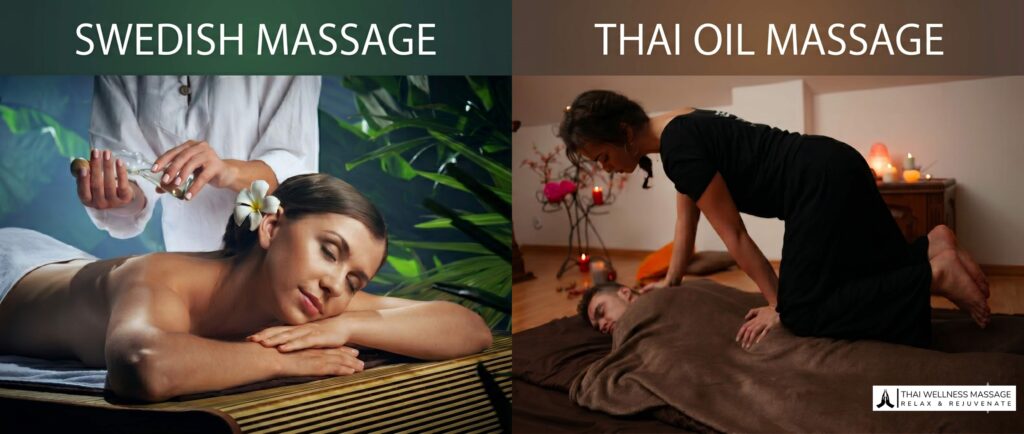
When it comes to relaxation and body therapy, not all massages are created equal. Two of the most beloved styles in the world — the Swedish massage and the Thai oil combination massage — may both use oil and promise deep relief, but the experience, philosophy, and technique behind each couldn't be more different. Understanding those differences can help you choose the right treatment for your body and your needs.
The Western Approach: Swedish Massage
Born in 19th-century Europe, the Swedish massage is widely considered the foundation of modern Western massage therapy. Its design is straightforward: to relax the entire body through a series of long, flowing, rhythmic strokes that move in the direction of the heart.
Key characteristics of Swedish massage:
- Effleurage — long, gliding strokes that warm up the muscle tissue and encourage circulation
- Petrissage — kneading and squeezing of the muscles to release surface tension
- Friction — circular, deeper pressure applied to specific areas of tension
- Tapotement — light, rhythmic tapping to stimulate the nervous system
- Vibration — gentle shaking movements to loosen tight muscles
Oil is generously applied throughout a Swedish session — not as a therapeutic agent in itself, but as a medium that allows the therapist's hands to glide smoothly across the skin without friction. The strokes are broad, sweeping, and designed to cover large muscle groups, producing a deeply sedative and calming effect on the nervous system.
The goal of Swedish massage is fundamentally restorative: reduce stress hormones, improve blood flow, ease muscle soreness, and leave the client in a state of total physical and mental relaxation. It is a passive experience — the client simply receives, surrendering the body to the therapist's hands.
The Eastern Approach: Thai Oil Combination Massage
Thai massage, in its traditional form, is one of the oldest healing arts in the world — rooted in the ancient medicine systems of Thailand and drawing from Indian Ayurvedic traditions. What makes the Thai oil combination massage unique is that it blends the therapeutic stretching and assisted yoga postures of traditional Thai massage with the smooth, gliding benefits of oil application.
Where Swedish massage glides over the body, Thai oil combination massage works with the body — moving it, bending it, and stretching it in ways the client cannot easily achieve alone.
Key characteristics of Thai oil combination massage:
- Assisted stretching — the therapist gently guides the client's limbs, spine, and joints through a range of motion, similar to passive yoga
- Compression techniques — rhythmic pressing along the body's energy lines (known as Sen lines) to release blockages and stimulate energy flow
- Joint mobilization — careful manipulation of shoulders, hips, knees, and ankles to improve flexibility and reduce stiffness
- Oil application — warm oil is applied to ease the transitions between stretches and allow for smooth, fluid movement across the skin
- Acupressure points — targeted pressure is applied along specific points to relieve tension and promote internal balance
The oil in a Thai oil combination massage serves a dual purpose: it conditions the skin and reduces friction during stretching, but it also enhances the therapist's ability to apply sustained, meaningful pressure along the body's energy pathways. The result is a session that is simultaneously invigorating and deeply relaxing.
East vs. West: The Core Differences
| Swedish Massage | Thai Oil Combination | |
| Origin | Europe (19th century) | Thailand / Southeast Asia (ancient) |
| Philosophy | Anatomical & circulatory | Energetic & holistic |
| Primary technique | Long sweeping strokes | Stretching & compression |
| Client role | Passive — body is still | Active — body is moved |
| Oil purpose | Glide & lubrication | Glide + energy work support |
| Focus | Muscle groups & circulation | Energy lines, joints & flexibility |
| Sensation | Soothing, sedative | Invigorating, releasing |
| Best for | Stress relief, relaxation | Flexibility, stiffness, energy flow |
Which One Is Right for You?
If you are looking for a deeply calming experience that melts away the tension of a long week — where you simply close your eyes and drift — the Swedish massage is your sanctuary. Its gentle, rhythmic strokes are perfect for first-time massage clients, those with sensitive muscles, or anyone seeking pure, uncomplicated rest.
If you are ready to go deeper — to feel your body open up, your joints release, and your energy move freely — the Thai oil combination massage offers something profoundly different. It is the right choice for those who feel stiff, restricted, or energetically blocked, and who want to leave the table feeling not just relaxed, but renewed and realigned.
The Beauty of Combining Both Worlds
Here at our studio, we believe that East and West each hold a unique wisdom about the human body. The Swedish tradition teaches us that rest is healing. The Thai tradition teaches us that movement is medicine. Together, in the Thai oil combination massage, these philosophies unite to offer one of the most complete bodywork experiences available.
Whether you choose the flowing grace of Swedish or the mindful stretch of Thai oil combination, your body deserves to be cared for with intention, skill, and knowledge drawn from the best of both worlds.
Book your session today and let us help you find your balance.
Written for Thai Wellness Massage, LLC

0 Comments